4 Maintenance Habits That Help Prevent Aircon Water Leaks
Key Highlights
- Cleaning your filters every two weeks significantly reduces the risk of water leaks.
- Clearing the drainage line prevents water from backing up into the indoor unit.
- Checking for ice formation on the coils helps identify airflow issues early.
- Scheduling professional servicing ensures the internal drain pan remains clean.
Introduction
Water leaking from an air conditioner can quickly become more than an inconvenience. An aircon leaking water may stain walls, damage nearby furniture, and create damp conditions that encourage mould growth. In many cases, the problem develops gradually because dust, blocked drainage, dirty coils, or worn insulation interfere with normal condensation removal.
Regular maintenance can reduce the likelihood of these issues. Knowing how to clean an air conditioner filter is one of the simplest preventive steps, but homeowners should also pay attention to drainage flow, coil condition, and the physical installation of the indoor unit. The following four habits can help keep an aircon dry and operating efficiently.
1. How Often Should You Clean an Air Conditioner Filter?
A dirty filter restricts airflow through the indoor unit. When airflow becomes too weak, the evaporator coil can become excessively cold and start freezing. Once the ice melts, the sudden amount of water may exceed what the drain pan can handle, causing water to drip from the unit.
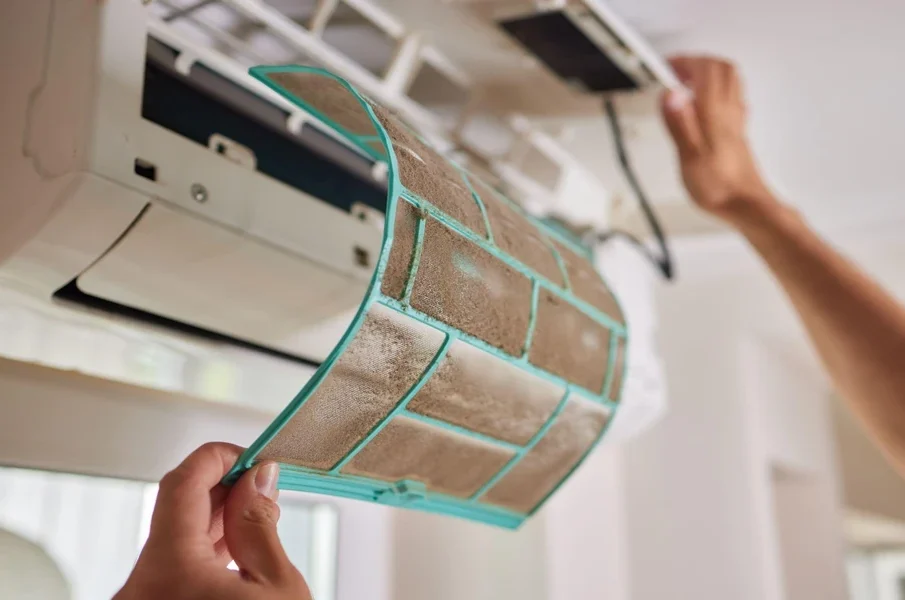
Learning how to clean an air conditioner filter properly can help prevent this chain of problems. Start by switching off the unit before opening the front panel and removing the mesh filters. Vacuum away loose dust, then rinse the filters under lukewarm water. Mild detergent can help remove stubborn dirt, but strong chemicals and hot water may damage the material.
Before reinstalling the filters, make sure they are completely dry. Cleaning frequency depends on usage and indoor conditions, but households that use air conditioning regularly should inspect their filters frequently rather than waiting until airflow noticeably weakens.
A simple filter-cleaning routine should include:
- Switching off the aircon before removing the filters
- Vacuuming loose surface dust
- Washing the filters gently with lukewarm water
- Allowing them to dry fully before reinstallation
Regular filter care also helps the system maintain stronger airflow and more consistent cooling.
2. How Can You Tell If an Aircon Drainage Pipe Is Blocked?
The drainage pipe carries condensation away from the indoor aircon unit. Dust, algae, slime, and other debris can gradually build up inside the pipe and restrict water flow. Once the blockage becomes severe, water may back up into the drain pan and eventually overflow from the indoor unit.
Homeowners can sometimes identify drainage problems before a major leak develops. If the visible end of the drainage pipe produces less water than usual while the aircon is operating, a partial blockage may be forming. Visible grime around the outlet can provide another warning sign.
The drainage pipe should also maintain a clear downward path so gravity can carry water away efficiently. Kinks, sagging sections, or incorrect positioning may cause water to collect instead of draining properly.
Minor visual checks can help homeowners spot early problems, but deeper blockages usually require professional servicing. Technicians may use specialised equipment to clear accumulated debris without damaging the drainage system.
3. Can Dirty Evaporator Coils Cause an Aircon to Leak Water?
Yes. Even with clean filters, small particles can reach the evaporator coils and collect on the metal fins. Heavy dirt affects heat transfer and may contribute to coil freezing. It can also interfere with the normal movement of condensation into the drain pan.
Homeowners can inspect the coils whenever they remove the filters. Use a torch to check for heavy dust, discolouration, or visible ice. Light surface dust may sometimes be removed carefully with a soft brush, but the aluminium fins bend easily and should not be scrubbed aggressively.
The table below can help distinguish between conditions that may require simple monitoring and those that suggest professional servicing.
| What You Notice | Possible Meaning | Recommended Action |
| Light surface dust | Normal gradual accumulation | Monitor during regular filter cleaning |
| Thick grey or brown grime | Reduced coil efficiency | Arrange deeper cleaning |
| Visible ice on coils | Restricted airflow or another cooling issue | Stop prolonged use and arrange inspection |
| Repeated dripping after cleaning filters | Drainage or internal component problem | Contact an aircon technician |
Persistent grime often indicates that routine filter cleaning alone is no longer sufficient. Professional servicing can remove contamination from areas that homeowners cannot safely access.
4. Why Is My Aircon Leaking Even After Cleaning the Filter?
If cleaning the filter does not stop the problem, the leak may relate to insulation or installation rather than dirt.
Refrigerant pipes contain cold refrigerant and therefore require proper insulation. The foam surrounding these pipes helps prevent moisture in the surrounding air from condensing on their surface. When insulation deteriorates, splits, or becomes damaged, condensation may form around the pipes and appear as unexplained dripping near the aircon unit or pipe entry points.
The position of the indoor unit also affects drainage. Condensed water needs to flow naturally towards the drainage outlet. If the unit becomes misaligned, water may collect on the wrong side of the drain pan instead of leaving through the intended outlet.
Homeowners should avoid attempting to reposition the indoor unit themselves. Incorrect adjustment could affect the mounting, piping, or drainage connections. Instead, look for warning signs such as damp patches near piping, repeated dripping from one side of the unit, or leaks that continue despite basic cleaning.
Frequently Asked Questions
What Is the Most Common Cause of an Aircon Leaking Water?
Blocked drainage and restricted airflow are common causes. A clogged drain pipe can force condensation back into the indoor unit, while dirty filters or coils may contribute to freezing and excess water when the ice melts.
Can a Dirty Air Filter Really Cause Water Leakage?
Yes. Restricted airflow can make the evaporator coil excessively cold and cause ice to form. When the ice melts, the drain pan may struggle to handle the additional water.
How Often Should I Check My Aircon Filter?
The ideal frequency depends on how often you use the aircon and how quickly dust accumulates. Regular users should inspect the filter frequently and clean it before heavy dust restricts airflow.
Can I Clear a Blocked Aircon Drain Pipe Myself?
You can inspect accessible sections for obvious dirt or poor positioning, but deep blockages often require professional equipment. Avoid inserting objects into the pipe because this may damage the drainage system.
Why Does My Aircon Still Leak After Cleaning?
The problem may involve a clogged drainage pipe, dirty evaporator coils, damaged insulation, an improperly levelled indoor unit, or another internal fault. Recurring leaks usually require a professional inspection.
When Should I Call an Aircon Technician?
Arrange servicing when water leakage continues after basic filter cleaning, when you notice ice on the coils, when drainage appears blocked, or when dampness develops around insulated piping.
Contact Airple to have persistent aircon leaks inspected and determine whether your unit requires drainage clearing, deeper cleaning, or another maintenance service.





-
Benefits of Investing in Condos: A Comprehensive Guide
Why Condos provides numerous advantages for real estate investors who are looking ... -
-