
What Your Daily Routine Can Reveal About the Best Window Covering for Your Home
What to Remember When Choosing Window Coverings
- Your daily habits can help determine whether blinds or curtains better suit each room in your home.
- Blinds provide precise control over incoming light, while curtains offer a softer appearance and a wide range of fabric choices.
- Blackout fabrics can support better sleep by limiting unwanted light, particularly in bedrooms facing bright streets.
- Motorised systems can simplify daily adjustments, especially for large windows or hard-to-reach areas.
- The best choice depends on how you use a room, the level of privacy you need, and the amount of maintenance you can manage.
Why Should Your Window Coverings Match Your Daily Habits?
Window coverings affect more than the appearance of a room. They influence how much daylight enters your home, how easily you can maintain privacy and how comfortable your surroundings feel throughout the day. A design that works well for someone who spends most of the day outside may not suit someone who works from home.
Start by thinking about your typical schedule. Do you wake up early and prefer natural light in the morning? Do you work near a window and need to reduce glare on your screen? Perhaps you enjoy watching films in the evening or need a dark bedroom to sleep during the day.
These habits provide useful clues when comparing window treatments. Rather than choosing the same style for every room, consider how each space supports your daily activities. You may find that curtains work best in the bedroom while blinds suit the kitchen or home office.
How Do Blinds and Curtains Differ in Everyday Use?
When weighing up window blinds vs curtains, consider how each option handles light, privacy, appearance and daily adjustments.
Blinds generally consist of slats or a continuous covering that can be raised, lowered or adjusted. Depending on the design, you can direct daylight into a room without fully exposing the interior. This makes them useful for workspaces, kitchens and areas where light levels change throughout the day.
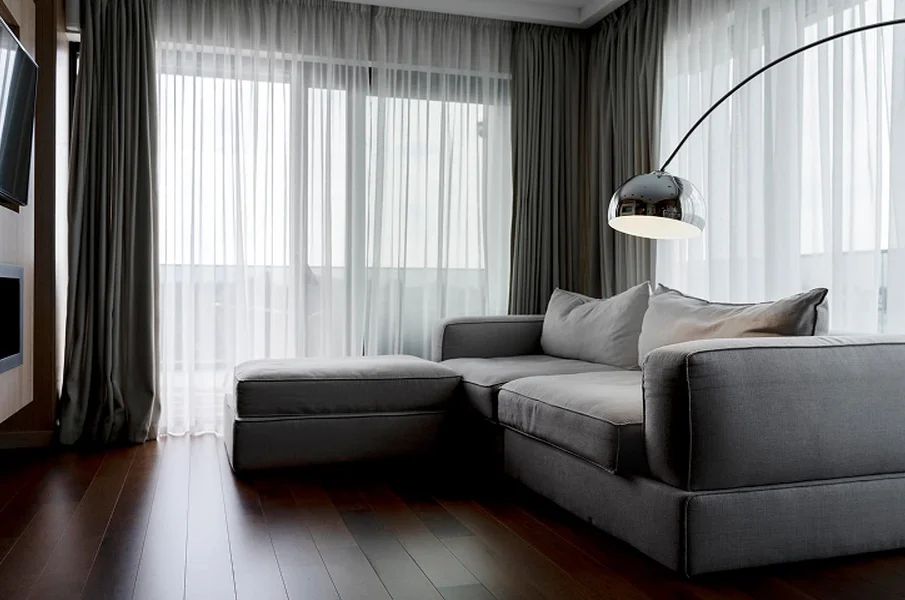
Curtains use fabric panels that slide across a window. They provide a softer finish and can help a room feel more welcoming. Their appearance also varies widely, from lightweight fabrics that filter daylight to heavier materials that reduce incoming light.
The following comparison can help you assess which option suits different activities.
| Daily need | Blinds | Curtains |
| Controlling daylight | Adjustable slats can direct light precisely | Opening or closing the panels changes light levels |
| Creating a softer interior | Available in different colours and finishes | Wide choice of fabrics, textures and folds |
| Maintaining privacy | Adjustable designs can limit direct views | Closed panels provide a visual barrier |
| Reducing unwanted light | Depends on the design and fit | Lined or blackout fabrics can provide strong light control |
| Managing large windows | Some designs work well across broad openings | Wide panels can cover large windows, although heavier fabrics may need more effort to move |
Neither option is automatically better for every home. Your room layout, window size and preferred level of control all matter.
Which Window Covering Suits Your Morning and Evening Routine?
Think about how you use each room at different times of the day. In a bedroom, you might want sunlight to enter gradually in the morning but prefer a darker setting at night. In a living room, you may want bright daylight for reading before reducing glare when watching television.
For bedrooms, thicker curtains or blackout designs can help limit light from street lamps, nearby buildings and early morning sunshine. They can be particularly useful for people who work late or have changing sleep schedules. If you prefer waking up with daylight, consider a covering that can open easily and completely.
For home offices, blinds can make it easier to adjust the amount of daylight reaching a desk. This may help reduce reflections on screens while preserving some natural light. In shared living areas, curtains can create a relaxed atmosphere and provide additional coverage when neighbouring homes overlook your windows.
- Morning: Do you prefer a bright room as soon as you wake up?
- Working hours: Do you need to limit glare while keeping the space well lit?
- Evening: Do you watch television or use a projector that works better in a darker room?
- Privacy: Can people outside see directly into your home?
- Cleaning: How much time can you spend maintaining your window coverings?
Your answers can help narrow down suitable designs for each space.
When Are Motorised Blackout Curtains Worth Considering?
Manual curtains and blinds are sufficient for many homes, but motorised systems can make regular adjustments easier. This is especially useful if you have tall windows, wide glass doors or coverings that are difficult to reach.
Motorised blackout curtains combine automated movement with fabric designed to block most incoming light when properly fitted. You can open them in the morning and close them before bedtime without pulling the panels by hand. Depending on the system, you may operate them using a remote control or compatible smart-home controls.
They can be practical for people who follow consistent routines. For example, someone working night shifts may prefer to close the curtains before sleeping during daylight hours. Families may also appreciate the convenience of adjusting large curtains without moving furniture or reaching across a room.
However, motorisation is not essential for everyone. Consider the additional cost, the available power supply, the window’s dimensions and the type of control system before making a decision. The fit also matters. Light can enter through gaps around the sides or above the curtain, even when the fabric itself blocks most of it.
Find a Window Covering That Works With Your Lifestyle
The right window treatment should support the way you live rather than create another daily task. Blinds may suit rooms where precise light adjustment matters, while curtains can provide a softer look and flexible fabric choices. Blackout and motorised options may be worth considering when sleep, convenience or light control is a priority.
You can also combine both types in one room. For instance, blinds can provide adjustable privacy during the day, while curtains add texture and extra coverage in the evening. This approach lets you adapt the space to different activities without relying on one solution for every need.
Before committing, assess the window’s dimensions, the room’s lighting conditions and the time you want to spend operating and maintaining the covering. A choice based on these practical details is more likely to remain useful as your routine changes.
Contact us at Jia Le Textile to explore the differences between blinds and curtains and find a suitable window covering for your home.







-
Is 5.5 mm Good For Vinyl Plank Flooring?
When deciding on the thickness of your plank flooring, you should keep ... -