
Shoe Storage for Small Spaces
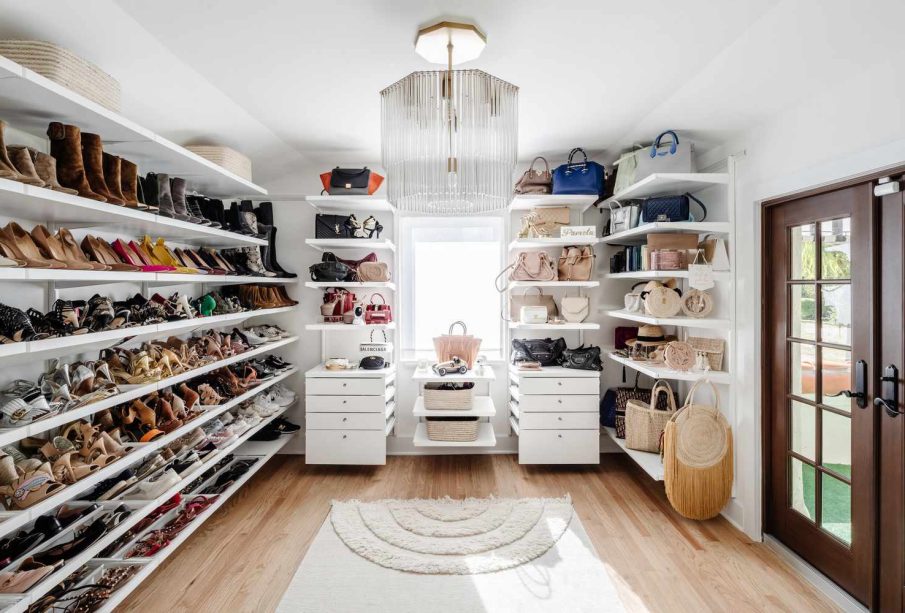
The best shoe storage for small spaces utilizes vertical height rather than floor area. Over-the-door organizers, wall-mounted floating shelves, and slim shoe cabinets (under 12 inches deep) are the most space-efficient options. For extremely limited entryways, a clear over-the-door pocket organizer can hold up to 24 pairs while taking up zero actual floor space.
Shoes are one of the hardest things to organize in a small apartment or entryway. They’re oddly shaped, take up significant space, and tend to pile up near the door. The right storage solution keeps them accessible without dominating the entry.
Best Shoe Storage Options by Space
|
Storage Type |
Space Required |
Capacity |
Best For |
|
Over-the-door organizer |
None (uses door) |
12-24 pairs |
Closet door or back of entry door |
|
Slim shoe cabinet |
6-12″ deep, wall width |
12-20 pairs |
Entryway or hallway wall |
|
Floating wall shelves |
Wall space only |
6-15 pairs |
Hallways, display-style storage |
|
Entryway bench + cubbies |
2-3 sq ft floor |
4-8 pairs |
Entry with sitting space |
|
Stackable shoe boxes (clear) |
Shelf or closet floor |
Variable |
Closet, seasonal organization |
|
Under-bed storage |
Under bed |
10-20 pairs |
Seasonal or overflow shoes |
|
Shoe cabinet with tipping doors |
10-14″ deep x 30″ wide |
20-30 pairs |
Clean aesthetic, hides shoes |
Over-the-Door Shoe Organizers
The most space-efficient option for apartments. They hang on the back of a closet or entry door and hold 12-24 pairs without touching the floor. Look for ones with deeper pockets if you’re storing boots or sneakers – shallow pockets are really only good for flats and sandals. IKEA’s SKUBB and basic Amazon options run $10-$25.
Slim Shoe Cabinets
A slim shoe cabinet (sometimes called a ‘shoe armoire’) is the most aesthetically clean solution. They look like a narrow piece of furniture but open to reveal angled shelves for shoes. Dimensions to look for: under 12 inches deep, 28-36 inches tall. SONGMICS and VASAGLE both make highly-rated options in the $60-$100 range.
Entryway Bench With Shoe Storage
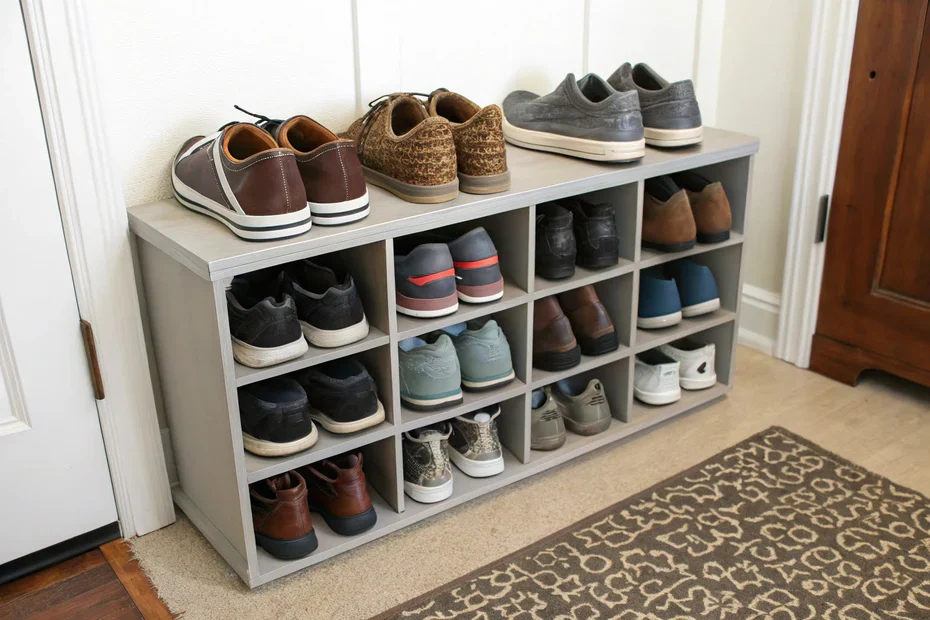
If you need seating at the entry for putting on shoes, a bench with built-in cubbies solves two problems at once. Look for styles with open cubbies on the bottom and a shelf above for 4-6 pairs of everyday shoes. The IKEA HEMNES or BRIMNES shoe bench are good examples.
Vertical Shoe Towers
- Use a 5-tier shoe rack that takes up about 1 square foot of floor space and holds 10-15 pairs
- Angled shoe racks are more compact than flat ones – shoes sit at a tilt and take up less depth
- DIY option: a tall narrow bookcase with added dowels or tension rods creates an open shoe display
Organizing Tips
- Keep only current-season shoes accessible – store off-season shoes in boxes under the bed
- Rotate by frequency: daily shoes at eye level, occasion shoes on higher or lower shelves
- Use clear stackable boxes for shoes you don’t wear often – you can see what’s inside without digging
- A basket for house slippers near the door is cleaner than a rack for just one or two pairs
Final Thoughts
Small space shoe storage works best when you use vertical height (walls and doors) rather than floor space. The over-the-door organizer is the best zero-footprint option; a slim shoe cabinet is the best if you want something that looks intentional and hides the shoes. Most people also benefit from periodic decluttering – fewer shoes always makes any storage system work better.



-
What does a pediatric dentist do? Find more here!
Numerous dental clinics in Fishers offer pediatric dentistry services. Previously known as ... -
-