Narrow Living Room Dining Room Combo: Layout & Design Ideas
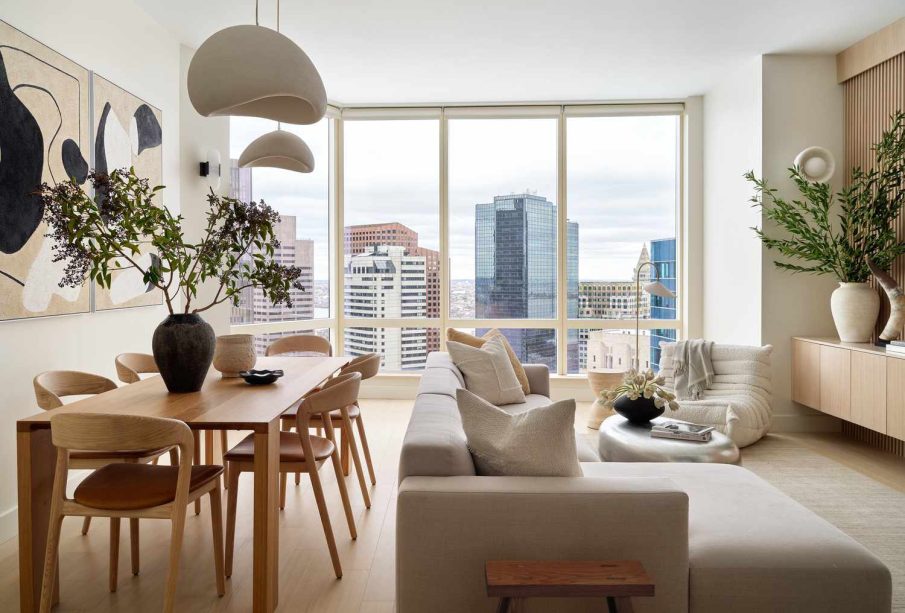
In a narrow living room dining room combo, the key is to define two distinct zones without making the space feel divided or cramped. Use a long area rug to anchor the living area, position furniture parallel to the long walls, choose a round or narrow dining table, and use vertical elements (tall shelves, floor lamps, pendant lights) to draw the eye upward and make the space feel larger.
Long, narrow open-plan spaces are common in apartments and townhouses. The challenge is making them feel intentional – two separate rooms that flow into each other rather than one awkward corridor of furniture.
Layout Strategies for a Narrow Space
|
Strategy |
How It Helps |
Best For |
|
Zone with a large area rug |
Visually separates living from dining area |
Any narrow layout |
|
Furniture parallel to walls |
Maintains flow through the center |
Very tight spaces |
|
Round dining table |
No sharp corners, fits better, seats more |
Dining end of the room |
|
Sofa against the wall |
Opens up floor space in the living zone |
Rooms under 10 ft wide |
|
Vertical storage / shelving |
Draws eye up, adds storage without floor space |
All narrow rooms |
|
Floating pendant over dining |
Defines the dining zone without a physical barrier |
Rooms with no dividing wall |
Furniture Selection Tips
Scale is everything in a narrow combo room. Oversized sofas and large rectangular dining tables are the most common mistakes. Instead:
- Choose a sofa no deeper than 36 inches – apartment-scale sofas exist for this reason
- Pick a round or oval dining table – round tables seat more people proportionally and have no wasted corners
- Use dining chairs that can tuck completely under the table to free up visual space
- Consider a bench on one side of the dining table – it tucks flush and takes up less visual weight than chairs
- Choose furniture with legs (not solid bases) to let light pass underneath – it makes the room feel less heavy
Color and Light Tricks
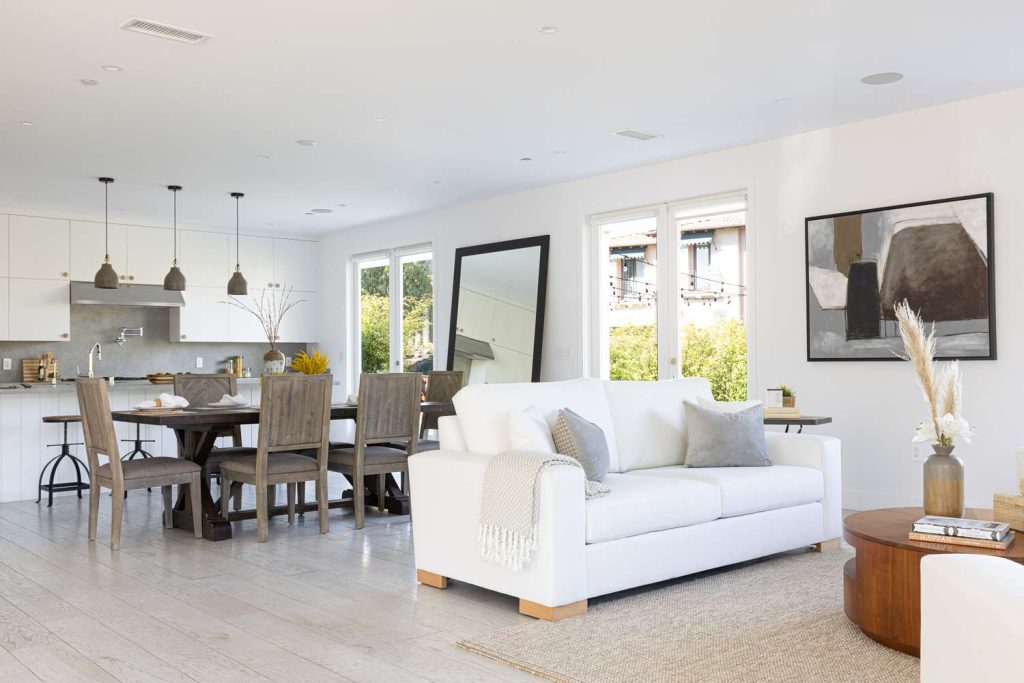
- Use the same flooring throughout – breaking it up with different materials makes the space feel smaller and more fragmented
- Keep the color palette consistent across both zones – too many different colors in a narrow room feels chaotic
- Mirrors on the narrow end walls add perceived depth
- Avoid hanging curtains that stop at the window frame – hang them from ceiling height to make the room feel taller
Sample Layout Ideas
|
Room Width |
Living Zone Setup |
Dining Zone Setup |
|
Under 10 ft |
Sofa against wall, 2 chairs or loveseat opposite |
Round table for 4, no sideboard |
|
10-12 ft |
Sofa + 1 chair, small coffee table |
Round or oval table for 4-6, bench on one side |
|
12-14 ft |
Rectangular table for 6 is possible |
What to Avoid
- Don’t place furniture perpendicular to the long walls – it cuts the room into even shorter segments
- Don’t use two large area rugs – one oversized rug unifying the living space is better than two competing ones
- Don’t hang artwork at the same height throughout – vary it to create rhythm, not sameness
Final Thoughts
A narrow living-dining combo can feel pulled-together and spacious with the right layout. The most impactful changes are furniture scale (smaller, legged pieces), a unifying area rug, and a round dining table. These three adjustments alone transform how the room reads – from tight corridor to intentional open plan.





-
Learning Excellent Tips for Home Staging
You should always remember some preparation tips to ensure you do all ... -
-