When to Call an Appliance Service Technician

Most appliance failures don’t happen all at once. There’s usually a stretch of days or weeks where something is quietly going wrong before the appliance finally stops working altogether, and knowing how to read those early signals is the difference between a routine repair and an emergency replacement. Business owners in particular tend to push through minor issues because stopping to deal with them feels like an interruption, right up until the appliance fails completely during service hours and the interruption becomes unavoidable. Knowing the specific warning signs across different appliance types helps decide when a call is worth making now rather than later, and that timing decision alone often determines whether a repair stays small or turns into a much larger job.
Unusual Noises Are Rarely Cosmetic
A grinding, clicking, or high-pitched whine coming from a compressor, motor, or fan is almost never something to ignore. In refrigeration units, a new noise from the compressor area often points to bearing wear or a failing start relay, both of which get more expensive to fix the longer they run under strain. In washing machines and dryers, a rhythmic thumping usually means a worn drum bearing or an unbalanced load pattern that’s stressing internal components. None of these noises fix themselves with time, and continuing to run the appliance while a mechanical part is failing usually means a bigger repair bill once a technician finally gets to it, since a worn bearing left running long enough can damage the surrounding housing it sits inside.
Temperature Inconsistency in Cooling Equipment
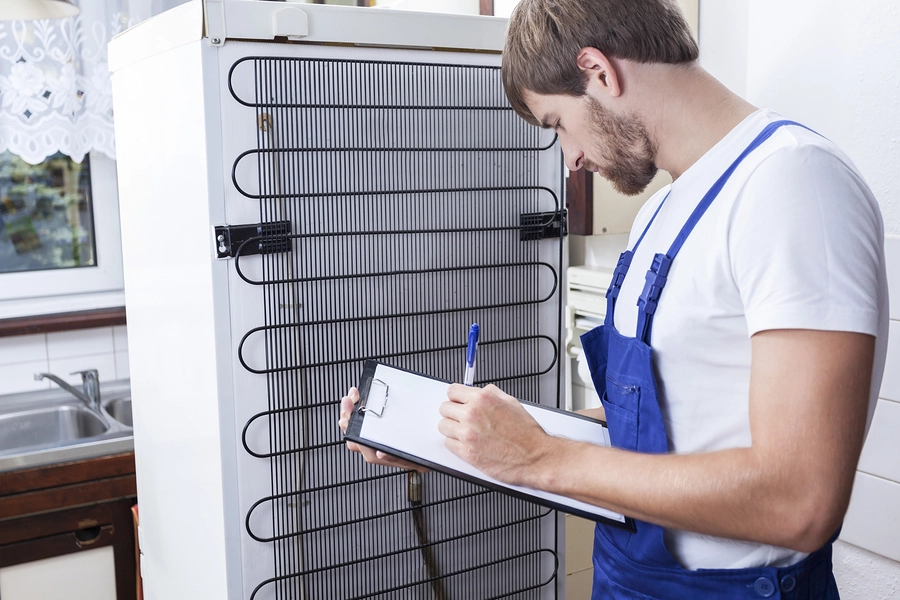
Refrigeration equipment, whether a household fridge or a commercial walk-in chiller, should hold a stable temperature. When food starts spoiling faster than expected, when ice cream softens in a freezer that used to keep it rock solid, or when a thermometer inside the unit shows fluctuating readings across a day, that’s a sign the cooling system is struggling, whether from a refrigerant leak, a failing thermostat, or a condenser coil clogged with dust and grease. In commercial kitchens this is a food safety issue as much as a mechanical one, and waiting until the unit fails completely risks an entire stock loss rather than a manageable repair. A simple habit of checking fridge and freezer temperatures with a separate thermometer once a week, rather than trusting the built-in display alone, often catches this drift before any food is actually lost.
Electrical Warning Signs Need Immediate Attention
Any appliance that trips a circuit breaker repeatedly, produces a burning smell, or shows scorch marks around its power cord or outlet needs a technician immediately, not a wait-and-see approach. These symptoms point to potential wiring faults or component failures that carry a genuine fire risk, and continuing to use the appliance in that state is not worth the convenience of avoiding a service call. This applies equally to home kitchens and commercial settings, though the stakes are higher in a business environment where multiple pieces of equipment might share the same electrical circuit and a fault in one unit could affect others nearby.
Rising Utility Bills Without an Obvious Cause
An unexplained jump in electricity usage is often the earliest sign that an appliance is working harder than it should to do the same job. A refrigerator with a failing door seal, a dirty condenser coil, or a struggling compressor will draw significantly more power to maintain temperature, and an air conditioning unit low on refrigerant behaves the same way, running longer cycles for less cooling output. Businesses tracking utility costs across multiple locations are often better positioned to catch this pattern early, since a sudden spike at one site compared to others is a useful diagnostic signal on its own, separate from any obvious visible fault.
When DIY Troubleshooting Has Reached Its Limit
Checking whether an appliance is plugged in properly, whether a circuit breaker has tripped, or whether a filter needs cleaning is reasonable before calling anyone. Beyond that, most appliance repair moves into territory that requires proper tools, refrigerant handling certification, or specialised diagnostic equipment that isn’t available to the average household or even most in-house maintenance staff. For businesses considering when to bring in a qualified appliance service technician rather than attempting an internal fix, the general rule is straightforward: if the fault involves refrigerant, gas lines, or internal electrical components beyond a simple reset, it’s outside the range of safe self-repair.
Recurring Faults Are a Signal, Not a Coincidence
If the same appliance keeps developing the same problem after being serviced, that’s rarely bad luck. It usually means the underlying cause wasn’t properly diagnosed the first time, a technician replaced a symptom-level part without identifying why that part failed in the first place. Businesses running equipment fleets should treat repeat faults on the same unit as a signal to request a more thorough diagnostic review rather than another quick fix, since the cost of solving the root cause once is almost always lower than paying for the same repair repeatedly over a year.
Scheduled Downtime Beats Emergency Downtime
The best time to call a technician is often before anything visibly breaks at all. Appliances nearing the end of a typical service interval, showing gradual efficiency loss, or approaching a manufacturer-recommended maintenance point benefit from a proactive inspection rather than waiting for failure. This is especially true for businesses where an appliance breakdown during peak hours costs far more in lost operations than a scheduled maintenance visit during a slower period ever would, and building that inspection into a quieter operating window means it barely registers as a disruption at all.







-
Uses of Temporary Fencing
Not all fences are built for the long-term. In fact, many of ... -
-