4 Ways Sunlight Influences Furniture, Flooring & Décor
Key Takeaways
- Prolonged sunlight exposure can fade upholstery, curtains, rugs, artwork and other decorative materials.
- Different flooring materials respond differently to ultraviolet (UV) radiation, visible light and heat.
- Solar heat can contribute to temperature changes that affect materials such as wood, leather and some plastics.
- Interior design choices can help manage daylight while protecting furnishings and maintaining visual comfort.
- Window treatments, furniture placement and material selection can reduce unnecessary exposure without completely blocking natural light.
Introduction
Natural light can make indoor spaces brighter and reduce the need for artificial lighting during daylight hours. However, regular exposure to sunlight also affects the appearance and condition of furniture, flooring and decorative materials.
Sunlight contains UV radiation, while direct solar exposure also introduces heat. Over time, these factors can contribute to fading, discolouration and changes in certain materials.
Managing these effects requires a balance between daylight and protection. Decisions such as comparing roller blinds vs curtains, repositioning furniture or choosing suitable materials can influence how much direct sunlight reaches interior surfaces.
How Does Sunlight Cause Furniture and Decorative Fabrics to Fade?
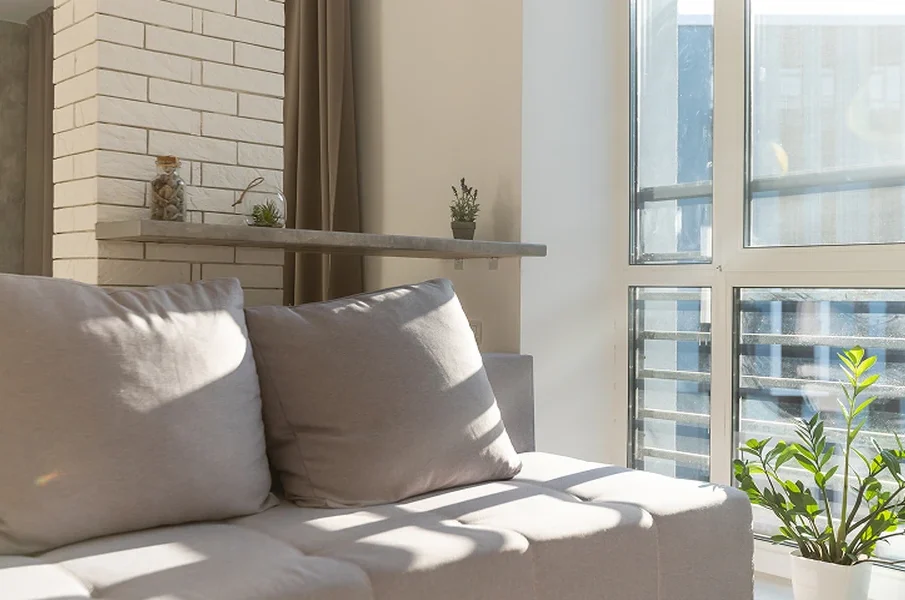
Sunlight can gradually change the colour of furniture, upholstery and decorative fabrics. UV radiation can break down chemical bonds in dyes and pigments, while visible light can also contribute to colour changes in susceptible materials.
Common household items affected by prolonged exposure include:
- Upholstered sofas and chairs
- Curtains and other decorative fabrics
- Rugs and carpets
- Wooden furniture
- Artwork and photographs
- Leather furnishings
The rate of fading varies according to the material, dye, duration of exposure and intensity of sunlight. Items positioned directly beside sunny windows may therefore show changes sooner than furnishings in shaded areas.
Window coverings can limit the amount of direct sunlight reaching these surfaces. Roman blinds, for example, can be adjusted according to changing daylight conditions rather than requiring a room to remain fully shaded throughout the day.
Overall, controlling prolonged direct exposure can help slow visible fading. However, sunlight can also affect structural surfaces such as flooring.
How Does Direct Sunlight Affect Different Types of Flooring?
Flooring materials do not respond uniformly to sunlight. Some may experience colour changes, while others can be affected by repeated temperature fluctuations.
| Flooring type | Possible effect of sunlight |
| Hardwood | Colour changes and uneven fading |
| Laminate | Fading or discolouration depending on its surface layer |
| Vinyl | Potential fading and dimensional changes from prolonged heat |
| Carpet | Gradual fading of dyes and fibres |
| Natural stone | Generally more colour-stable, although some varieties and finishes may change |
Uneven exposure can be particularly noticeable when rugs or furniture cover part of a floor. Protected sections may retain their original appearance while exposed sections gradually change.
Using window treatments during periods of intense direct sunlight can reduce exposure. This leads to another consideration: sunlight does not only produce light but also introduces solar heat into the room.
How Can Heat from Sunlight Affect Interior Materials?
Sunlight passing through windows can increase the temperature of interior surfaces. Materials positioned close to windows may consequently experience repeated heating and cooling as conditions change throughout the day.
Heat-related effects vary by material:
- Wood naturally expands and contracts as environmental temperature and moisture conditions change.
- Leather can lose moisture and may become dry when repeatedly exposed to heat and sunlight.
- Some plastics and synthetic materials can soften, warp or deteriorate under prolonged high temperatures.
- Adhesives used in certain furnishings or finishes may also be affected by excessive heat.
Reducing direct solar exposure can therefore help manage both light and heat. When considering roller blinds vs curtains, households may assess factors such as coverage, adjustability and the amount of daylight they want to retain.
These material considerations also influence broader decisions about how an interior is arranged and decorated.
How Does Sunlight Influence Interior Design Choices?
Natural light affects where furniture is positioned, which materials are selected and how window treatments are used. Rooms receiving strong sunlight may require different design decisions from rooms that remain shaded for much of the day.
Practical considerations include:
- Positioning sensitive furniture away from prolonged direct sunlight
- Rotating rugs or movable furnishings to encourage more even exposure
- Selecting materials and finishes suited to the room’s light conditions
- Using adjustable window coverings to manage changing sunlight
- Considering glare when positioning televisions, computer screens and reflective surfaces
Window treatments can also form part of a layered approach to daylight management. Roman blinds can provide adjustable window coverage, while curtains can add another layer where greater light control is required.
Ultimately, sunlight influences both material performance and room planning. Managing its intensity can allow natural light to remain useful while limiting unnecessary exposure of interior surfaces.
FAQs
Does sunlight permanently fade furniture?
Fading caused by prolonged light exposure is generally irreversible because the pigments or dyes have undergone chemical changes. The extent of fading depends on the material and level of exposure.
Which furniture materials are most sensitive to sunlight?
Textiles, leather, wood finishes and dyed materials can all experience changes from prolonged sunlight exposure. Their resistance varies according to manufacturing methods, pigments and protective finishes.
Can window coverings prevent sun damage completely?
Window coverings can reduce direct exposure but may not eliminate all UV radiation, visible light or solar heat. Their effectiveness depends on the material, coverage and how they are used.
Should furniture be kept away from windows?
Not necessarily. However, moving particularly light-sensitive furnishings away from areas receiving prolonged direct sunlight can reduce their exposure.
How can natural light be managed without making a room too dark?
Adjustable blinds, curtains and other shading methods can control direct sunlight while still allowing indirect daylight into the room. Furniture placement can also help protect sensitive materials without requiring windows to remain fully covered.
Visit De Art Studio and let us help you manage sunlight and preserve your home’s furniture, flooring, and décor.




-
5 Major Benefits of Roofing Replacement
A strong, well-maintained roof is one of the most important parts of ... -
-