
How Locker Room Ventilation Affects Stored Gear and Locker Life
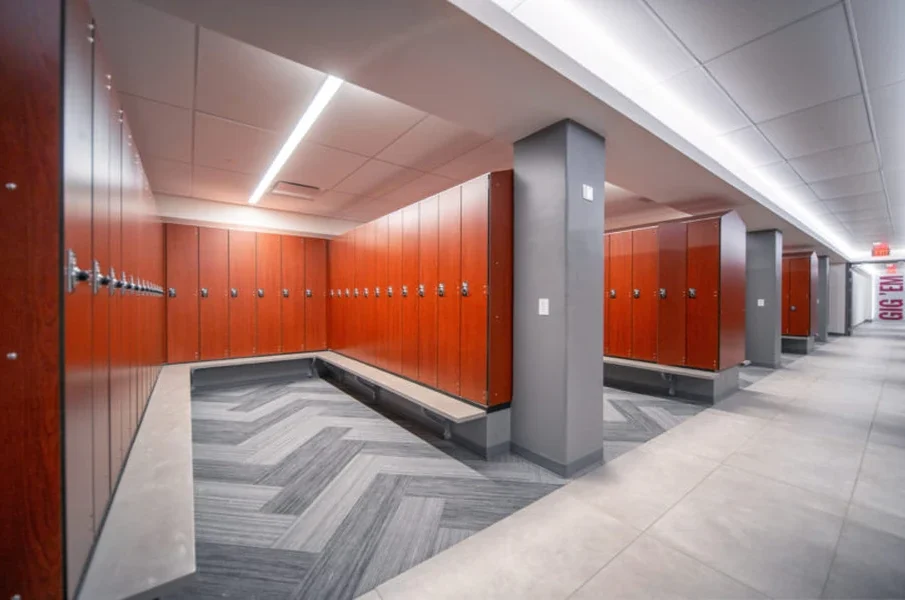
Locker room ventilation affects stored gear and locker life by controlling the humidity, temperature, and air movement that determine whether damp clothing dries or stays wet inside a closed compartment. Poor ventilation leads to odor, mildew on stored items, and faster deterioration of locker hardware and finishes.
Americans spend about 90% of their time indoors (U.S. Environmental Protection Agency).
Why is locker room air quality a design issue?
Locker room air quality is a design issue because locker rooms concentrate moisture from showers, sweat, wet towels, and damp gear in enclosed spaces. Without adequate air exchange, humidity builds and lingers.
Moisture as an air quality problem
Moisture and inadequate ventilation are major contributors to indoor air quality problems (U.S. Environmental Protection Agency). Locker rooms face these challenges more intensely than offices, classrooms, or corridors because moisture is generated continuously while the room is in use.
How does ventilation affect items stored inside lockers?
Ventilation affects items stored inside lockers by determining how quickly moisture escapes from damp clothing, towels, and equipment. Sealed compartments trap humidity, and trapped humidity creates conditions for odor-causing bacteria and mildew.
A common source of odor complaints
Athletic uniforms, pads, and shoes stored overnight in closed metal boxes are a common source of odor complaints. Ventilated locker doors and panels allow air to move through the compartment so that items dry between uses. The effect is most noticeable in facilities where users store gear for several days at a time.
How ventilated plastic lockers handle damp gear
Ventilated plastic lockers handle damp gear by pairing moisture-impermeable HDPE with ventilated doors that let contents dry more quickly, a standard feature on solid plastic Pro lockers (ASI Storage Solutions).
What locker features improve airflow?
Locker features that improve airflow include louvered doors, perforated panels, open mesh or lattice construction, and gaps that allow air to circulate between the locker and the wall or base. Each design trades some privacy or security for improved ventilation.
Common ventilation-focused locker features
- Louvers stamped into doors at the top and bottom
- Diamond or round perforations across door faces
- Expanded metal or lattice doors for maximum airflow
- Ventilated sides or backs on select configurations
- Open-front designs for team gear storage
Solid plastic lockers are available with ventilated door options as well.
How does room-level ventilation interact with locker design?
Room-level ventilation interacts with locker design because ventilated lockers only work when the surrounding room air is drier than the air inside the compartment. If the room itself is humid, opening up the lockers simply exposes stored items to the same damp conditions.
Mechanical systems that dry locker rooms
Mechanical exhaust, supply air distribution, and dehumidification all influence how well a locker room dries out between uses. Designers who coordinate locker placement with air supply and exhaust locations help move air past and through locker banks rather than letting it stagnate in corners.
How does ventilation affect locker durability?
Ventilation affects locker durability by reducing the moisture load on metal components, finishes, hinges, and latches. Persistent humidity accelerates corrosion on steel, especially at scratches, welds, and fastener points where coatings are thinnest.
Durability effects of poor ventilation
- Rust forming at hinge and latch points
- Finish blistering or peeling on painted surfaces
- Stiff or seized hardware from corrosion
- Odor absorption into porous stored items
- Shortened service life requiring earlier replacement
Choosing moisture-resistant materials like HDPE or phenolic helps in rooms that cannot be fully dried, but good ventilation benefits every material.
What maintenance practices support good airflow?
Maintenance practices that support good airflow include keeping exhaust fans in working order, cleaning grilles and louvers, leaving lockers open when not assigned, and discouraging users from storing wet items for long periods. Small operational habits make a measurable difference in odor and mildew complaints.
Operational practices for facility teams
- Inspect and clean exhaust fans on a regular schedule
- Vacuum or wipe dust from locker louvers and vents
- Prop unassigned lockers open to air out
- Post reminders to remove wet towels and uniforms daily
- Check for standing water near locker bases
How should designers plan ventilation for new locker rooms?
Designers should plan ventilation for new locker rooms by considering peak occupancy, shower count, locker type, and the length of time users store gear. Rooms used by teams that leave equipment overnight have different needs than rooms used for short daily visits.
Coordinating mechanical and locker design
Coordinating mechanical design with locker selection early in the project prevents costly retrofits. A ventilated locker specified in a well-ventilated room delivers the best outcome for both gear and equipment. Controlling moisture is the most effective way to prevent mold problems indoors, which is why locker room design should treat ventilation as a core requirement rather than an optional upgrade (U.S. Environmental Protection Agency).
How do seasonal changes affect locker room humidity?
Seasonal changes affect locker room humidity because outdoor moisture levels, heating and cooling cycles, and facility usage patterns all shift through the year. Summer humidity in warm climates adds to the moisture load that mechanical systems must remove, while winter heating can dry rooms more quickly.
Seasonal changes in usage
Athletic seasons also change usage. A locker room that sits quiet in summer may run at full capacity during fall sports, with gear stored daily. Facility teams that adjust exhaust schedules and cleaning frequency with those cycles keep conditions more stable year round.
What are the benefits of getting ventilation right?
The benefits of getting ventilation right include fewer odor complaints, drier gear, longer locker life, and a more pleasant environment for users. Facilities also save on replacement and repair costs over time.
Why airflow belongs in the locker specification
Locker rooms are among the hardest-working spaces in any building. Treating airflow as part of the locker specification, rather than a separate mechanical concern, produces storage that performs well for users and for the facility.




-
Is 5.5 mm Good For Vinyl Plank Flooring?
When deciding on the thickness of your plank flooring, you should keep ... -
-